
Commercial Solar Adoption by Companies

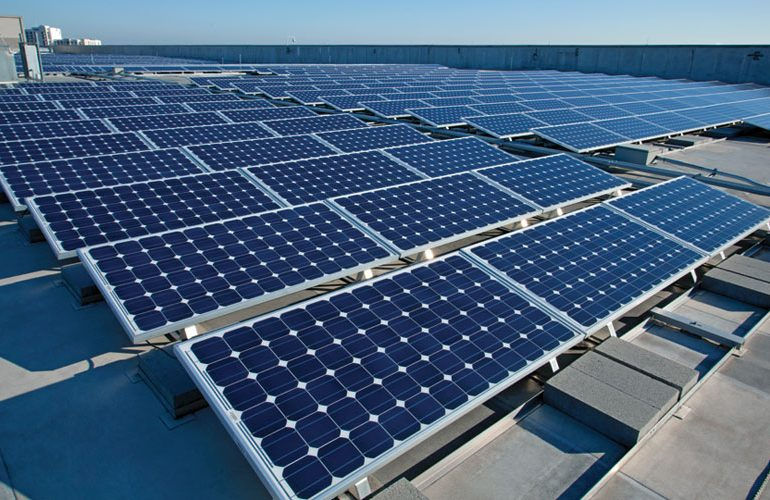
Commercial solar adoption is surging as companies seek to reduce high operational energy costs, enhance sustainability, and secure reliable power. Driven by economic viability, tax incentives, and net-zero goals, businesses are installing on-site captive systems to lower expenses and reduce grid dependence. Industries like manufacturing and logistics (e.g., warehouses) lead in adoption.
Key Drivers and Trends for Commercial Solar Adoption
Cost Reduction & Energy Security: Solar lowers high energy expenditures and offers a stable power supply, protecting businesses from grid failure and rising energy rates.
Sustainability & Brand Image: Adoption helps companies meet net-zero emissions targets, enhancing corporate reputation and fulfilling environmental, social, and governance (ESG) goals.
Technological Advancements: Increased efficiency in panels and innovations in solar-plus-storage make systems more reliable.
Massive Capacity Growth: Global commercial solar capacity is rapidly expanding, with significant growth projected to continue through 2025 and beyond, including large-scale, ground-mounted, and rooftop installations.
Government Incentives: Tax credits, rebates, and regulatory support reduce the payback period for corporate solar investments.
Top Industries Adopting Solar Power
Manufacturing and Textiles: High energy consumers using solar to manage operational costs.
Warehouses & Distribution Centers: Utilizing vast rooftop spaces for large-scale installations (e.g., Amazon).
Food Processing: Requiring consistent, low-cost power for operations.
Commercial Property & Retail: Developers integrating solar to add value and reduce tenant utility costs.
Key Commercial Solar Players (Example Regions)
Global/High-Efficiency Panels: SunPower, Canadian Solar, JinkoSolar, Trina Solar, Longi Solar.
Pakistan Sector: Reon Energy, Waaree Energies, Vikram Solar, Adani Solar, Loom Solar.
Commercial Solutions: TotalEnergies ENEOS, Shams Power.
Commercial solar adoption is no longer a forward-looking option—it’s becoming a core business strategy. As energy costs continue to rise and reliability concerns persist, solar offers companies a practical way to control expenses, ensure operational continuity, and meet sustainability commitments. With improving technology, supportive policies, and proven financial returns, the shift toward on-site solar is accelerating across industries.
Ultimately, businesses that invest in solar today are positioning themselves for long-term resilience and competitive advantage. By reducing dependence on conventional energy sources and aligning with global sustainability goals, commercial solar is set to play a defining role in how modern enterprises power their growth in the years ahead.


Comments